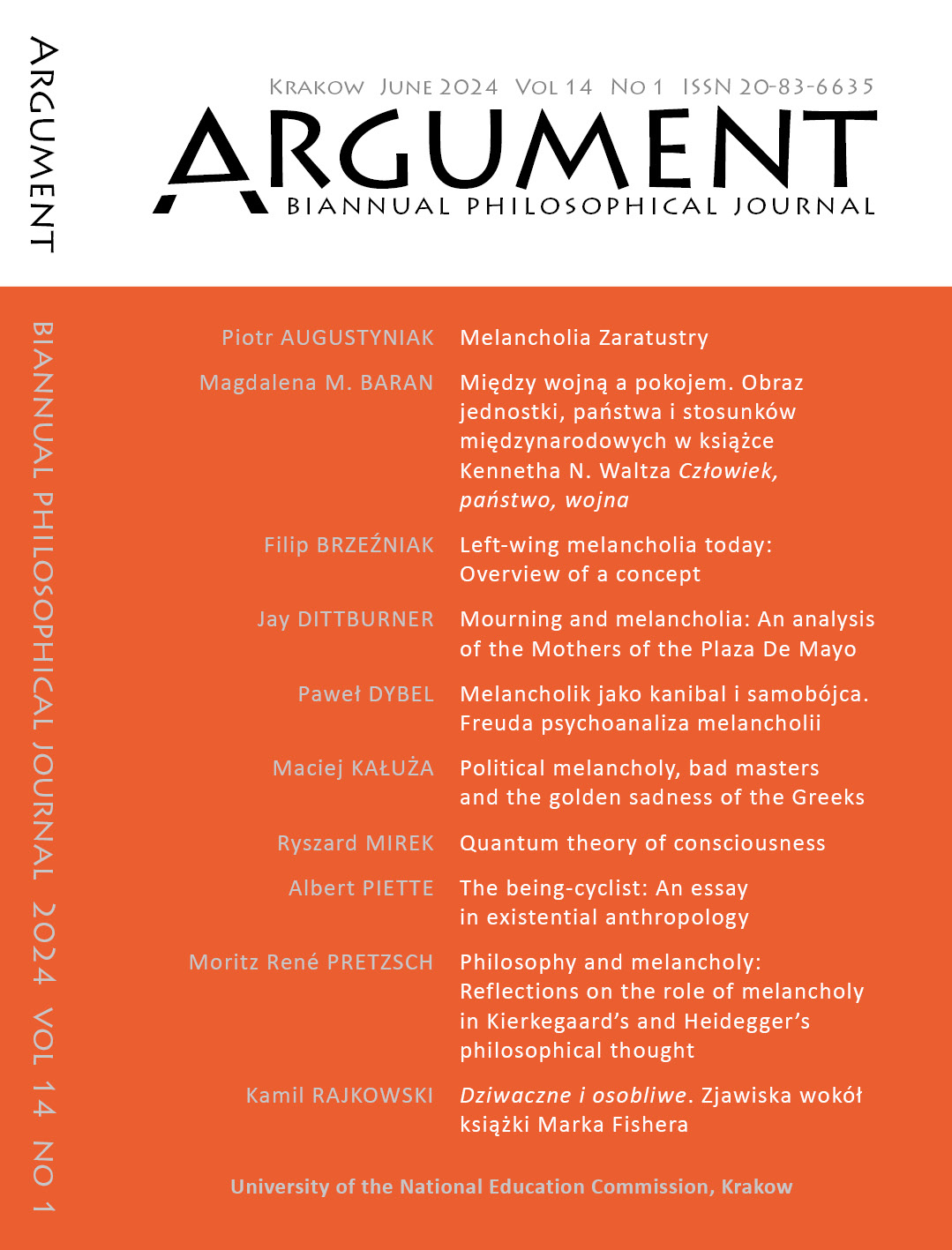
Political melancholy, bad masters and the golden sadness of the Greeks
DOI:
https://doi.org/10.24917/20841043.14.1.4Keywords:
philosophy and politics, philosophy of culture, political melancholy, the absurd in politics, cultural and political aspects of the absurd, studies in political cultureAbstract
This essay examines the idea of the absurd, not only as a metaphysical, individual experience — the main focus of existentialism — but also as a form of reaction to politics (something existentialist thinkers developed in their post-war writings). Two different ways of seeing this experience are taken into account, reaching back to Albert Camus’ study of the absurd in relation to politics of 1940’s as well as a more recent study of political melancholy by Lieven De Cauter. In the final part of the essay, reactions to the experience (political and cultural — not purely philosophical — feeling of loss of meaning) are reconsidered in the context of Camus’ ideas of resistance and rebellion. Although Camus’ remarks were predominantly related to the dangers of political ideology emerging from a feeling of loss, the author claims that contemporary experience might be also relate to contemporary situations connected to the environmental crisis.